What is a Thermoelectric Cooler and How Does it Work?
A Thermoelectric Cooler is a fascinating device with practical applications in various fields. It utilizes the Peltier effect to create a temperature difference, effectively providing cooling or heating. This technology finds its use in consumer electronics, HVAC systems, and even automotive applications.
Understanding how a Thermoelectric Cooler operates can unveil potential challenges. For instance, efficiency can be affected by environmental factors. While these devices offer compact cooling solutions, they may not perform well in extreme conditions. This makes consideration of their limitations critical.
The rising interest in energy-efficient alternatives highlights the relevance of Thermoelectric Coolers. They appeal to engineers and designers seeking innovative solutions. However, a real-world application may reveal unexpected performance variations. Users must be aware of their specific needs before implementation.
What is a Thermoelectric Cooler? An Overview of Its Definition
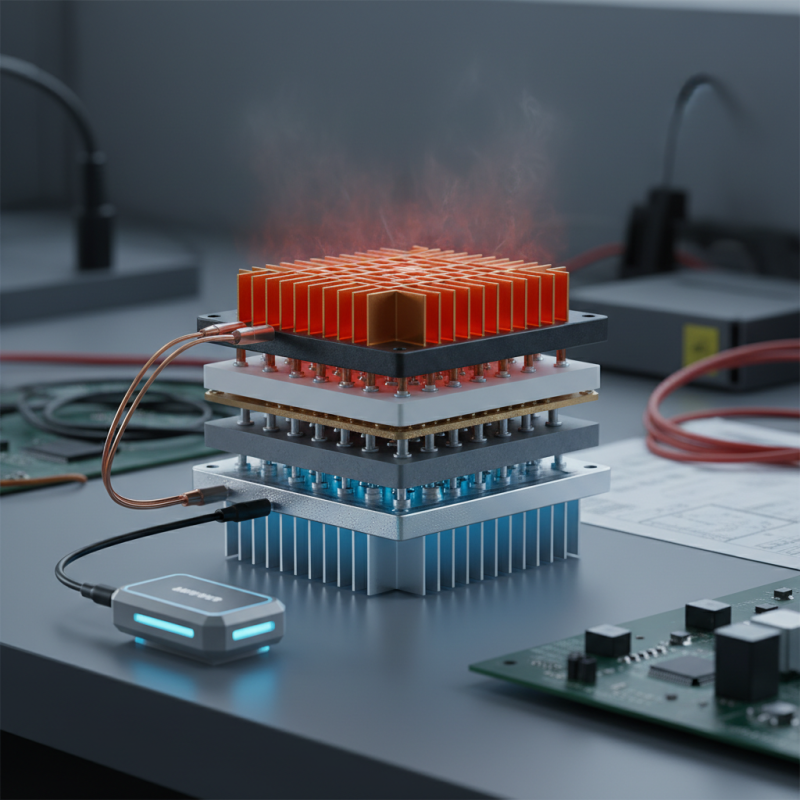
A thermoelectric cooler (TEC) is a compact device that uses the Peltier effect to create a temperature difference. This effect involves an electric current passing through two different conductors, resulting in heat absorption on one side and heat dissipation on the other. TECs are commonly found in portable coolers and electronic devices, offering a simple and efficient cooling solution without the need for bulky compressors.
One of the appealing aspects of thermoelectric coolers is their size. They can fit in tight spaces, making them versatile for various applications. However, their cooling efficiency is not as high as traditional refrigeration methods. They can struggle to maintain low temperatures in high ambient heat conditions. This limitation can lead to discussions on optimal use cases and whether additional cooling methods should complement their use.
In some situations, the noise level produced by TECs could be a concern. The small fans used to dissipate heat can introduce sound that may be distracting. Additionally, understanding the power requirements is essential, as a poorly managed power source can hinder performance. Users must carefully evaluate their needs before relying solely on thermoelectric coolers for critical cooling applications.
What is a Thermoelectric Cooler and How Does it Work?
| Feature | Description | Typical Applications |
| Principle of Operation | Uses the Peltier effect to create a temperature difference. | Cooling small electronic devices, portable coolers. |
| Cooling Capacity | Ranges from 30 to 70 watts depending on the size and model. | Food preservation, scientific instruments. |
| Power Consumption | Typically between 30 to 150 watts. | Portable refrigeration, thermal management in electronics. |
| Temperature Range | Can achieve temperature differentials of up to 70°C. | Medical devices, temperature-controlled storage. |
| Advantages | Solid-state design, no moving parts, quiet operation. | Space-sensitive applications, reliability in varying conditions. |
| Disadvantages | Lower efficiency compared to traditional cooling methods. | Not suitable for large scale cooling needs. |
Principle of Operation: How Thermoelectric Coolers Generate Cooling Effects
Thermoelectric coolers (TECs) operate on a principle called the Peltier effect. This phenomenon occurs when an electric current passes through two different conductors, creating a temperature difference. The effectiveness of cooling is determined by the material properties of the thermoelectric junctions. Research shows that bismuth telluride is among the most widely used materials for TECs, with an efficiency rating of around 5–10% depending on conditions.
The cooling effect produced by thermoelectric coolers is significant in various applications. For instance, TECs can reach temperature differentials of more than 60 degrees Celsius. This capability makes them ideal for small electronic devices where traditional cooling methods are impractical. However, efficiency drops at higher temperatures, highlighting a limitation in real-world applications. Engineers must carefully optimize the operating conditions to attain the desired cooling performance.
TECs are notable for their compact size and solid-state design, reducing maintenance needs. However, they are not always the most energy-efficient solution. The industry is working towards improving the materials and designs to enhance performance. Reports indicate the market for TECs is expected to grow significantly, with a projected value of $1.2 billion by 2025. Despite advancements, challenges in heat management remain, making ongoing research essential for future development.
Key Materials Used in Thermoelectric Coolers for Efficiency
Thermoelectric coolers (TECs) are essential in various cooling applications, harnessing the Peltier effect to create a temperature difference. The efficiency of these devices largely depends on the materials used. A significant proportion of current thermoelectric materials are bismuth telluride and lead telluride. According to a report from the Materials Research Society, these materials can achieve a ZT value, a dimensionless figure of merit for thermoelectric materials, of up to 1.0 at room temperature.
In addition to traditional materials, recent advancements focus on alternative compounds like silicon-germanium or skutterudites. Research published in the Journal of Applied Physics highlights that skutterudites can potentially reach ZT values of 1.5, offering higher efficiency in certain temperature ranges. However, integrating these materials often results in complex manufacturing processes. Standard techniques such as sintering can introduce imperfections, which impact the overall performance.
Materials must strike a balance between thermoelectric performance and mechanical stability. The challenge lies in achieving high efficiency while maintaining durability. Understanding these trade-offs is crucial for developing next-gen coolers. Further investigation into novel materials and methods remains imperative for advancing TEC technology.
Thermoelectric Cooler Efficiency by Material Type
This bar chart demonstrates the thermoelectric figure of merit (ZT) values for different materials commonly used in thermoelectric coolers. The higher the ZT value, the more efficient the material is for thermoelectric applications.
Applications of Thermoelectric Coolers in Various Industries
Thermoelectric coolers (TECs) have found their niche across various industries due to their unique capabilities. In electronic devices, they manage heat effectively. By using a thermoelectric module, these coolers create a temperature difference. This helps protect sensitive components from overheating. In automotive applications, thermoelectric modules assist in cooling the cabin while maintaining fuel efficiency. However, the efficiency of these systems can vary based on external temperature conditions.
In the medical field, TECs play a crucial role in the transport of pharmaceuticals and samples. They keep medications at stable temperatures during transit. This is vital for maintaining efficacy. The biotechnology sector relies on such coolers for preserving biological samples. Still, challenges exist in scaling the technology for larger applications. Some manufacturers report issues with durability over time. Innovations are needed to overcome these limitations.
TECs are also making waves in the food and beverage industry. They are used in portable coolers that maintain desired temperatures. This convenience is essential for outdoor events and camping. However, these coolers can drain batteries quickly, posing a challenge for prolonged use. Balancing performance and energy consumption remains a critical focus for developers. As research continues, the potential for thermoelectric coolers expands further into new industries.
Performance Metrics: What Makes a Thermoelectric Cooler Effective?
Thermoelectric coolers (TECs) use the Peltier effect to create temperature differences across two materials. This technology is often used in various applications, from electronics cooling to portable refrigeration. One key performance metric is the coefficient of performance (COP). A higher COP indicates more effective cooling for each watt of power consumed.
Another important factor is the thermal conductivity of the materials involved. Low thermal conductivity ensures efficient heat transfer, resulting in better cooling performance. Additionally, the maximum temperature difference, or delta-T, between the hot and cold sides impacts effectiveness. A larger delta-T often means more efficient cooling, but the material limits need careful consideration.
Real-world applications show that ideal conditions are rare. Variability in ambient temperature can affect performance. Users must note that while TECs provide precision cooling, they may not always meet high-temperature drops in practical settings. Understanding these nuances helps in optimizing the use of thermoelectric coolers, ensuring reliability and effectiveness.